Why Some Pouches Tear-Open Easily While Others Are Hard to Tear?
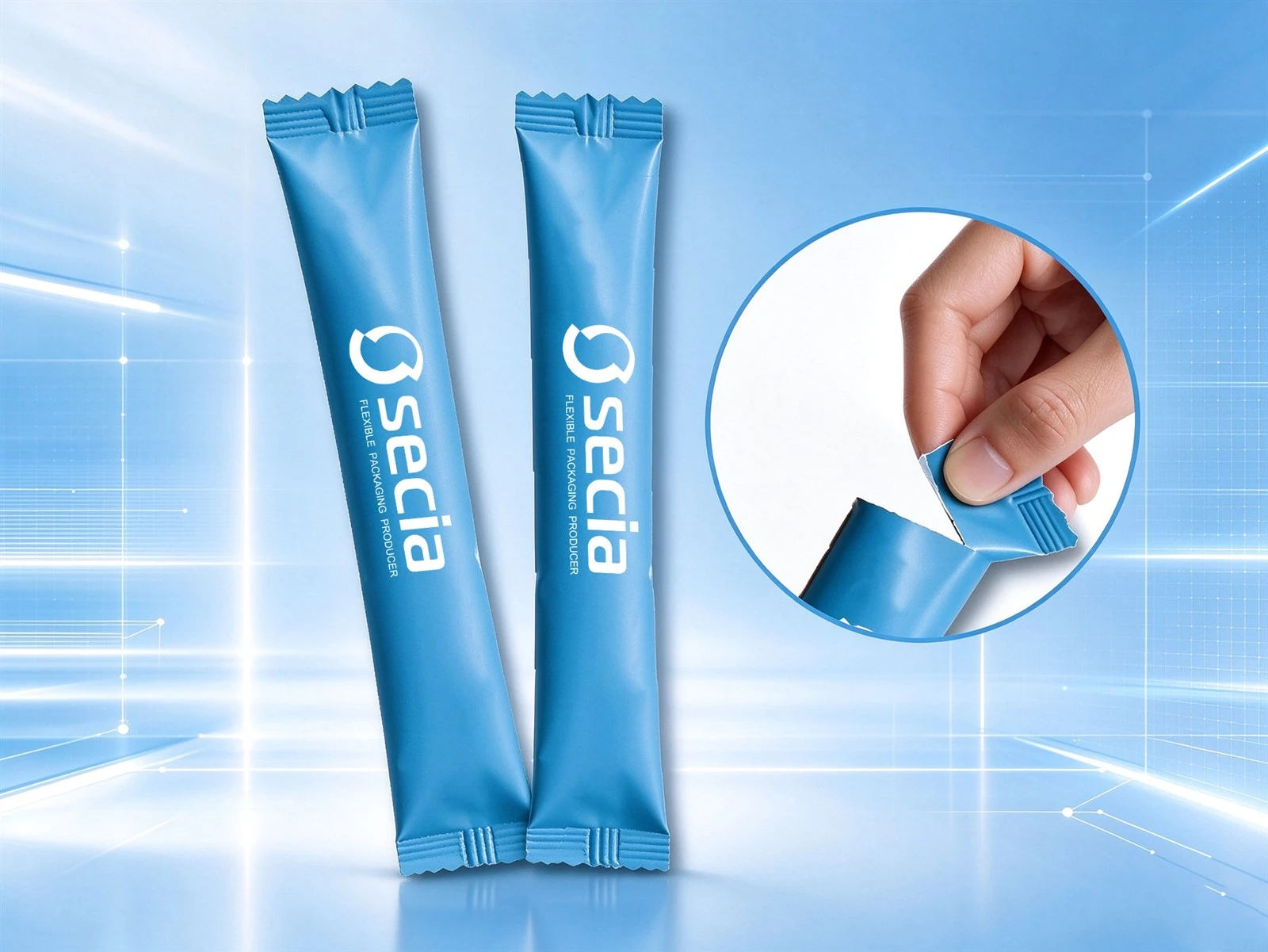
You may have noticed a common phenomenon in daily life: some flexible pouches tear open effortlessly along the notch, while others are extremely difficult to rip even with a clear V-notch. Tearing performance is not simply determined by whether there is a tear notch. It is affected by material selection, composite structure, heat-sealing parameters, notch craftsmanship and bag-making precision. Balancing easy-opening and transportation-resistant strength is one of the core challenges for flexible packaging development.
1. Material & Composite Structure: The Root Cause of Tearing Difference
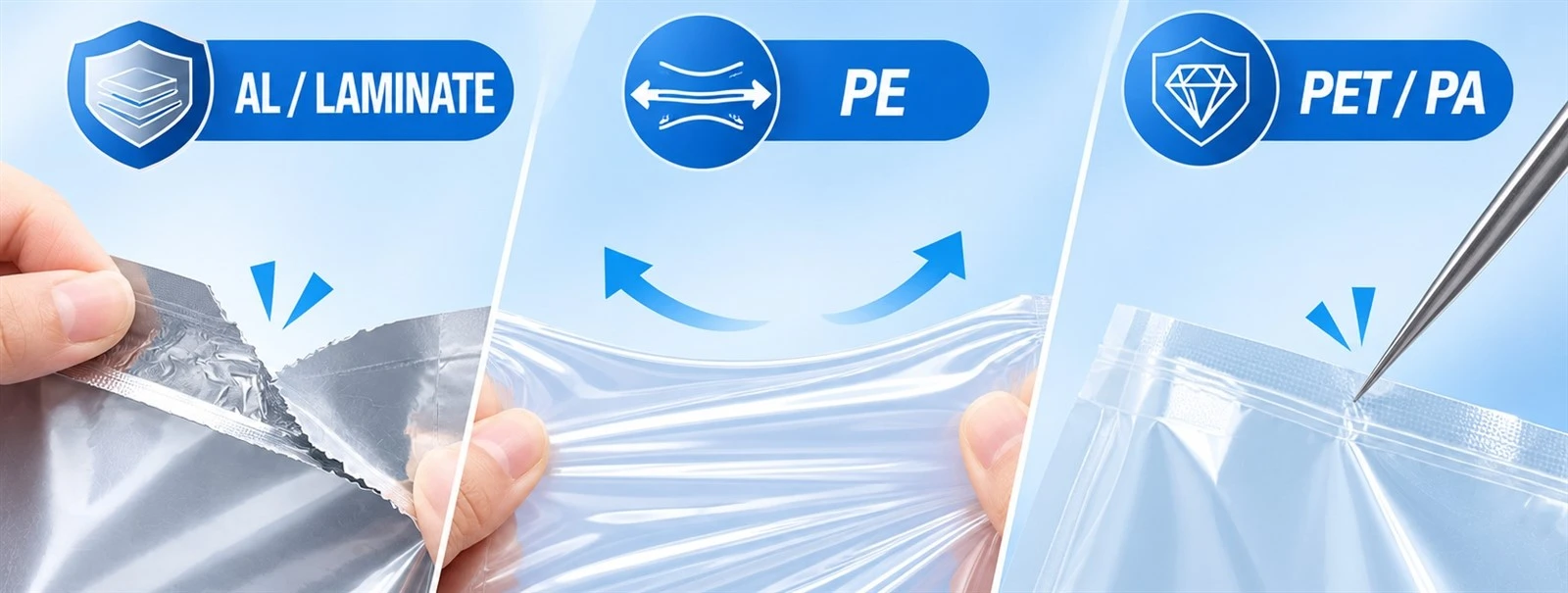
Different films have completely different toughness and tear-resistance performance.
Metallized film, aluminum foil composite
Aluminum-containing laminates generally tear smoothly once the notch starts cracking.
PE (Polyethylene)
PE features great ductility. Especially linear-low-density PE, it tends to stretch and deform instead of cracking under force. Even with V-notches, the pouch may only elongate without splitting open.
PET / PA (Nylon)
PET and nylon provide high puncture resistance. Thick-gauge PET-reinforced structures become harder to tear, improving anti-damage performance during transit.
Multi-layer composite pouches add extra variables. Poor lamination adhesion may cause delamination when tearing. Force separates film layers instead of cutting through the whole pouch, resulting in partial tearing and failed opening.Important reminder: High-barrier, vacuum, retort-sterilized pouches are intentionally designed with higher tear-resistance. Too-easy tearing leads to accidental rupture during shipment and spoils contents.
2. Tear-Notch Craftsmanship: Not All V-Notches Work Equally
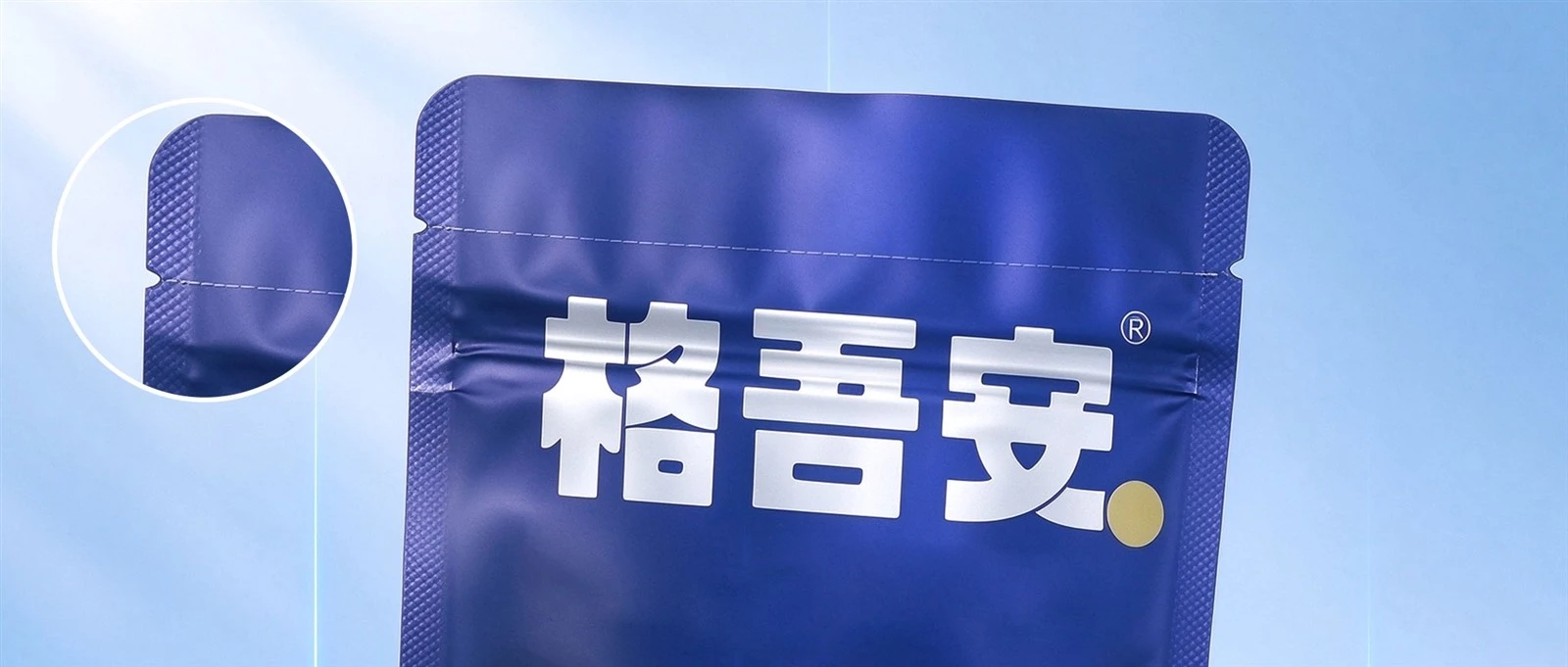
The V-shaped tear notch works on stress-concentration principle: force concentrates at the sharp corner to trigger cracking.
✓ Good notch
- Standard deep V-shape, clean cut by sharp die-cutting blade, provides reliable starting point for tearing.
✗ Poor-quality notch
- Shallow cut, rounded curved shape, worn cutting tool leads to incomplete incision. Visible notch on surface but cannot concentrate stress for cracking.
Notch position also matters. If it sits too close to seal edge or zipper, fingers lack space for gripping, making opening awkward even with qualified notch.
3. Heat-sealing Parameters Affect Opening Experience
Excessively high heat-seal temperature, pressure or long dwell time will raise seal strength. Even with qualified notch, users struggle to tear apart sealed edges.
However, we cannot simply reduce heat-seal strength for easier opening. Insufficient sealing causes leakage, delamination and spontaneous opening in storage and logistics. Packaging engineers must strike a balanced sealing-strength window for each product formula.
4. Advanced Solutions for Controlled Easy-Tear Performance
When standard V-notch cannot satisfy your requirement for smooth opening, the industry adopts two mature technical routes:
Laser Easy-Tear Line
Laser micro-weakened line guides tearing along pre-set straight track, avoids random zig-zag tear. Widely used for sachets for condiments and medical consumables.
Easy-Tear Modified Inner Film
TSpecial co-extruded easy-tear PE / CPP material achieves cohesive peeling. The film splits internally under force, instead of stretching, delivering stable easy-tear performance without sacrificing barrier and seal integrity.
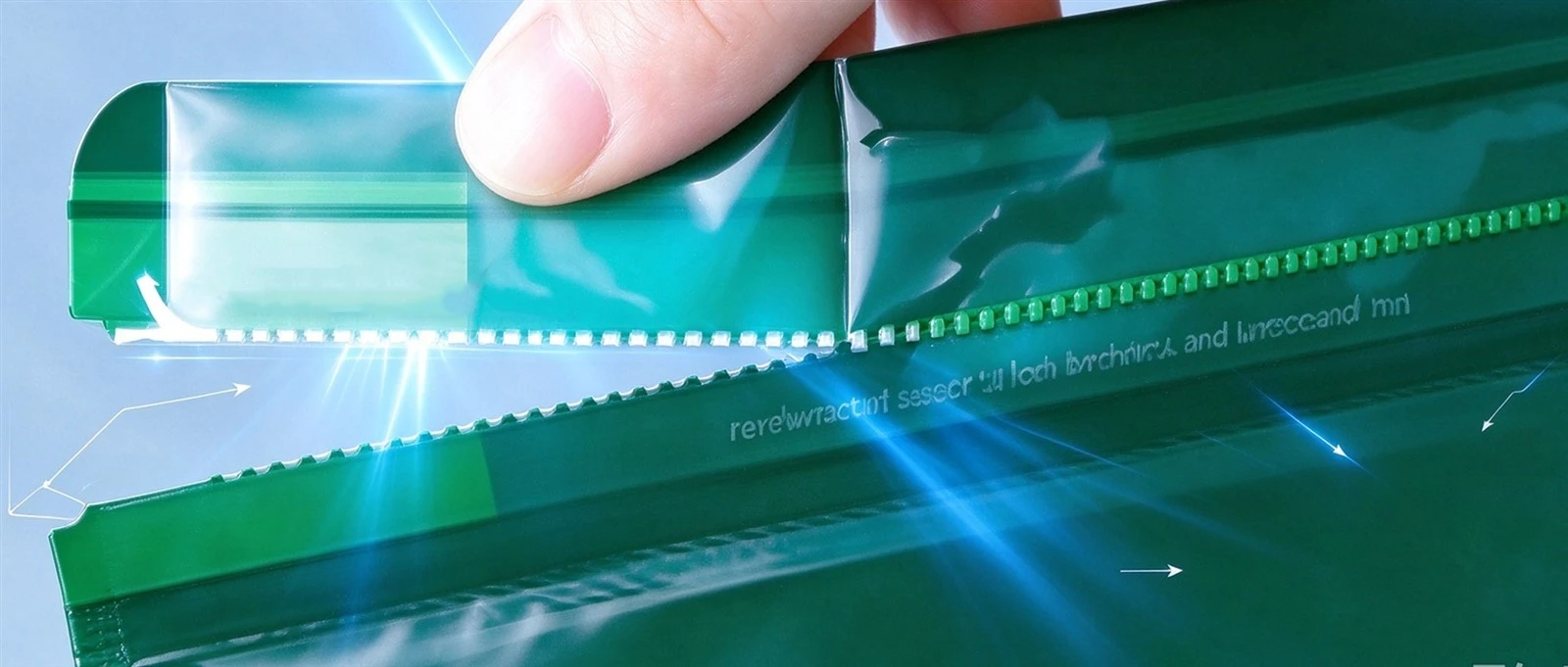
How To Choose Suitable Tearing Performance For Your Product
-
For single-use sample pouches, condiment sachets and medical consumable sachets: Prioritize easy-tear; adopt laser tear line or easy-tear inner material.
-
For vacuum food, retort pouches, heavy-weight pet food bags: Prioritize transportation safety; moderately increase tear-resistance, optimize notch geometry for acceptable manual opening.
-
For export products: Conduct real-world manual tearing test during sample phase, adjust material thickness, notch depth and heat-seal parameters before mass production.
Summary
Hard-to-tear pouches are not always manufacturing defects - it is a trade-off between user-friendly opening and packaging protection capability. If your end-users complain about poor opening experience, check four dimensions: composite material selection, notch die-cut quality, heat-seal strength, and whether an extra easy-tear technical upgrade is required.
Our technical team can test tear-resistance for your target application and customize material & processing parameters to match your balance of easy-opening and protective performance. Contact us for sample evaluation.